
Cricket has transformed dramatically with technology, and nothing represents this shift better than the Decision Review System (DRS). If you’ve ever watched a nail-biting LBW appeal or a faint edge decision, you’ve seen DRS in action.
But what actually happens behind the scenes?
How do UltraEdge, Hawk-Eye, and ball tracking work together to decide a batter’s fate?
What Is DRS in Cricket?
The Decision Review System (DRS) is a technology-based process used in international cricket to help umpires make more accurate decisions. Introduced by the International Cricket Council, DRS allows players to challenge on-field umpire decisions using advanced replay and tracking technology.
Why DRS Was Introduced?
Before this system, umpiring decisions relied purely on human judgment. Close calls – especially LBW, caught behind, and run-outs – often sparked controversy. DRS was created to:
- Reduce umpiring errors
- Increase fairness and transparency
- Improve fan confidence in decisions
Step-by-Step: How DRS Actually Works
Here’s the exact process from appeal to final verdict.
Step 1: Player Requests a Review
After an umpire gives a decision, the batting or fielding team has 15 seconds to request a review. The captain signals a “T” shape with hands to indicate DRS.
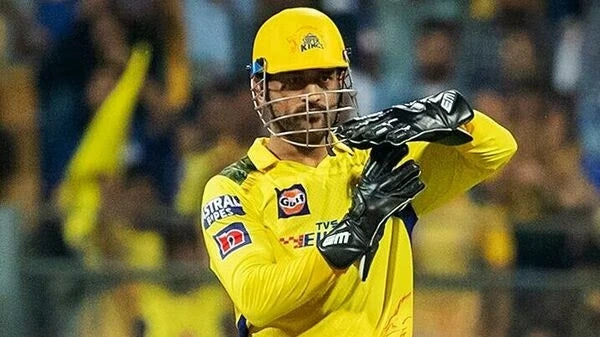
DRS Hand signal
Each team gets limited reviews per innings (usually 2 or 3 depending on the format).
Step 2: Third Umpire Takes Control
The on-field umpire sends the decision to the third umpire, who analyzes multiple camera angles and advanced technologies.
The review follows a strict order of checks:
- No-ball check
- Edge detection (UltraEdge/Snickometer)
- Ball tracking (Hawk-Eye)
Let’s break down these technologies.
UltraEdge Explained (Snickometer Technology)
UltraEdge detects tiny sound waves when the ball touches the bat or glove.
How UltraEdge Works
UltraEdge uses:
- High-speed microphones near the pitch
- Real-time waveform graphs
- Synchronized slow-motion video
When the ball passes the bat:
- A spike in the waveform = possible edge
- No spike = likely no contact
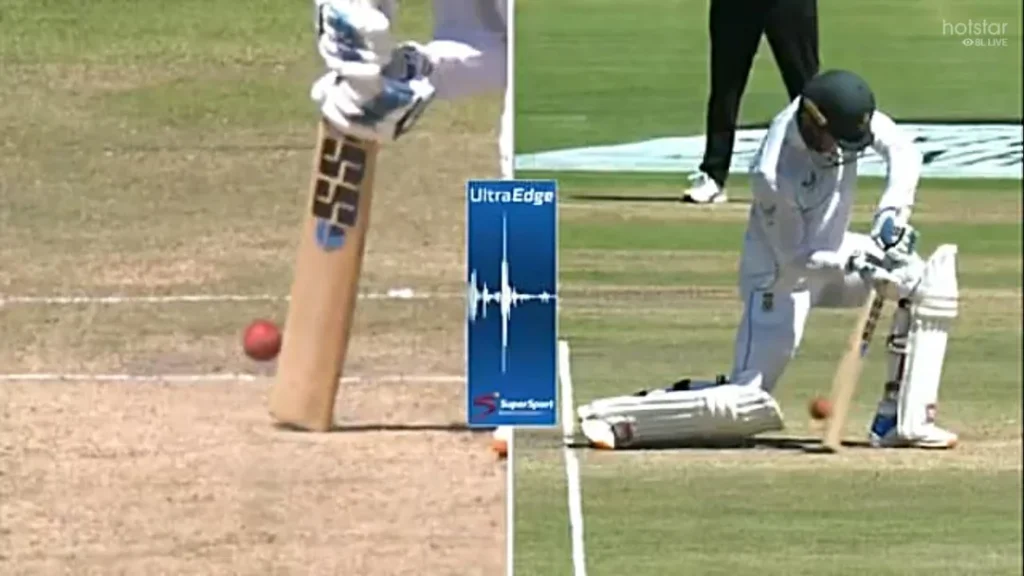
This helps decide caught behind and bat-pad appeals.
Fans often see the famous spike appear on screen – that tiny sound can change the entire match!
Hawk-Eye Ball Tracking Explained
Ball tracking is the most dramatic part of this system, especially during LBW decisions. The system is powered by Hawk-Eye Innovations.
How Hawk-Eye Works
Multiple cameras track the ball from release to impact. The system then predicts the ball’s future path using physics and historical data.
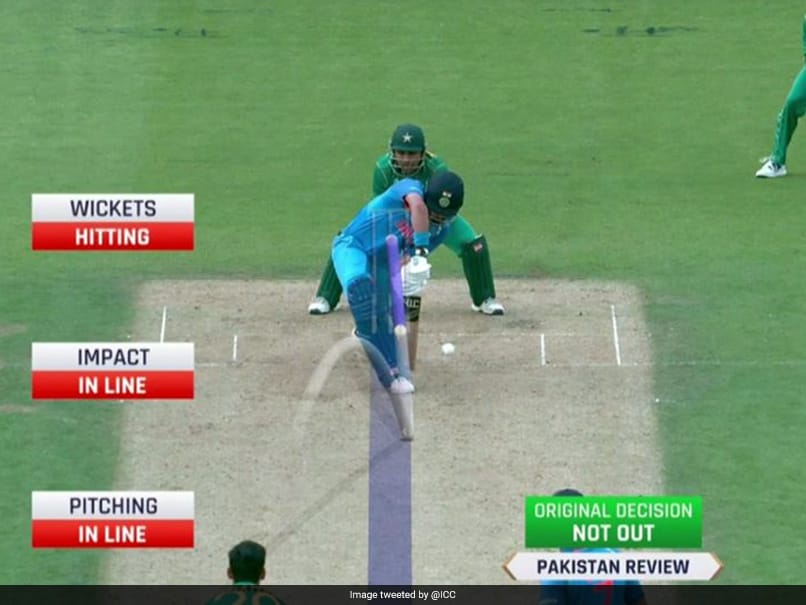
Hawk-Eye answers three crucial LBW questions:
- Pitching – Did the ball pitch in line with the stumps?
- Impact – Did it hit the batter in line?
- Wickets – Would it hit the stumps?
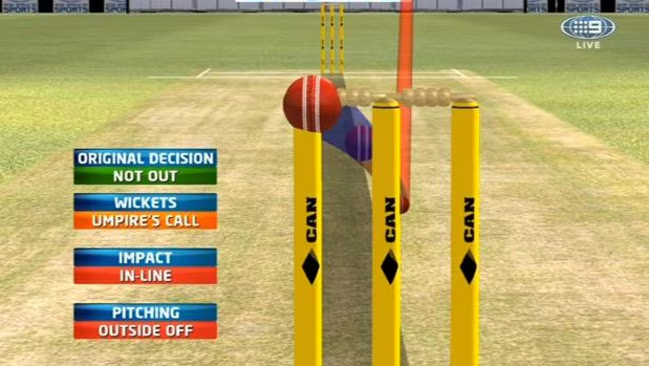
The famous “Ball Tracking Animation” shows the predicted path hitting or missing the stumps.
Understanding “Umpire’s Call”
This is the most controversial part of DRS.
What Does Umpire’s Call Mean?
If ball tracking shows only a small margin of hitting or missing, the original on-field decision stays.
Why? Because ball tracking is predictive, not 100% certain.
So if:
- Umpire gave OUT → stays OUT
- Umpire gave NOT OUT → stays NOT OUT
This rule balances technology with human judgment.
What Decisions Can Be Reviewed?
DRS is mainly used for:
- LBW decisions
- Caught behind / bat-pad
- Run-outs and stumpings
- Boundary checks
Not every decision can be reviewed, which keeps the game flowing smoothly.
How Accurate Is DRS?
Studies show DRS has significantly improved decision accuracy in international cricket. Many former players who initially opposed the system now support it because of its fairness.
Key benefits:
- Reduced controversial decisions
- More trust in umpiring
- Increased fan engagement
Why DRS Makes Cricket More Exciting
DRS has added drama and suspense to cricket. The pause, the replays, the tension while waiting for the verdict — it creates some of the most unforgettable moments in the game.
It has turned close calls into theatre and made cricket more modern and technology-driven.
Final Thoughts
DRS is no longer just technology — it’s an essential part of cricket. From UltraEdge detecting tiny edges to Hawk-Eye predicting ball paths, every review is a blend of science, data, and drama.
The next time you hear “Player Review,” you’ll know exactly what’s happening behind the scenes.
Read more about DRS on https://www.icc-cricket.com/about/cricket/rules-and-regulations/decision-review-system
Read more posts
- https://overthewicket.in/chennai-super-kings-2026-squad-analysis-new-era-led-by-ruturaj-gaikwad-sanju-samson/
- https://overthewicket.in/can-sanju-samson-deliver-again-ipl-form-ahead-of-mi-rivalry/
- https://overthewicket.in/why-ipl-is-the-richest-cricket-league/
- https://overthewicket.in/statement-comeback-by-dc-won-by-7-wickets/
- https://overthewicket.in/how-many-creases-are-there-in-cricket-the-simple-answer-every-fan-gets-wrong/