
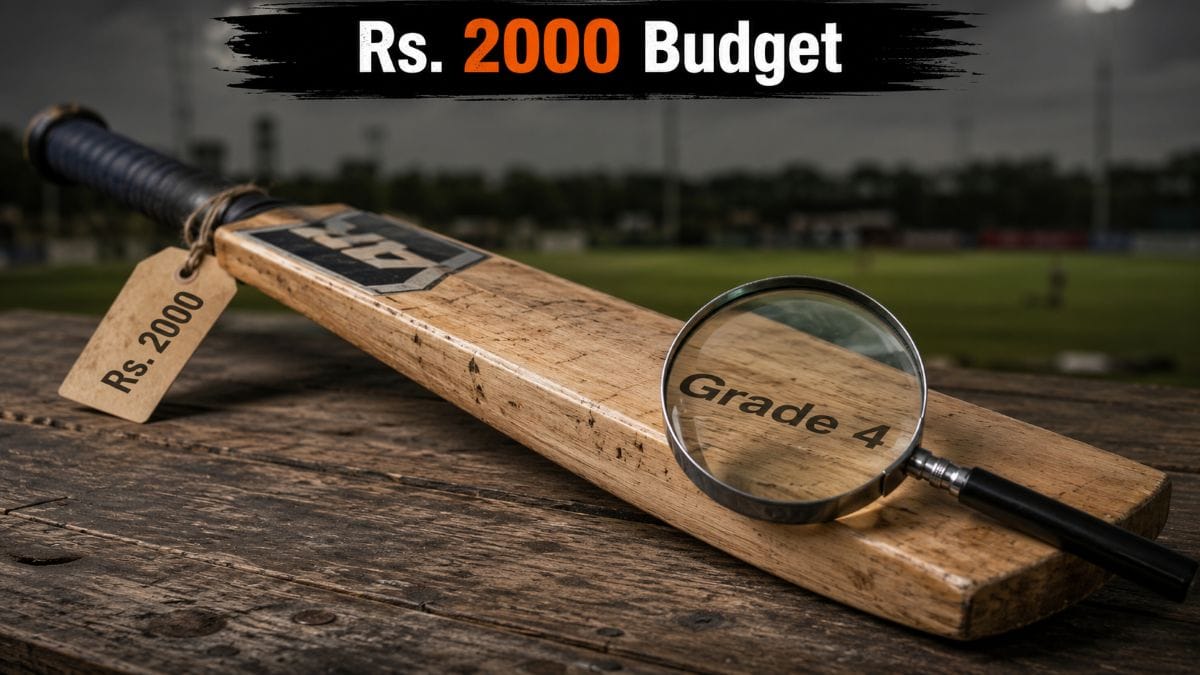
How do you get Best English Willow bats under ₹2,000? At ₹2,000, you are not getting a Grade 1 English willow bat with 12 straight grains. That bat costs ₹15,000+ and is used by professionals.
What you are getting is a Grade 3, 4, or 5 English willow bat — lower-grade willow that still offers that signature “ping” and lightweight feel, but with more knots, fewer grains, and less durability than its premium counterparts.
Here’s the honest truth: at this price point, you’re buying entry-level English willow, not pro-grade performance. And that’s perfectly okay — as long as you set the right expectations. For a complete 2026 overview of every budget cricket bat option — including Kashmir willow and hybrid models — check out our comprehensive guide to the best cricket bat under ₹2,000 .
In this guide, you’ll discover:
- ✅ 7 specific English willow bat models available for under ₹2,000
- ✅ What willow grades actually mean (and why they matter)
- ✅ English willow vs Kashmir willow — which is the smarter buy?
- ✅ A step-by-step guide to choosing the right bat
- ✅ Why knocking-in is non-negotiable for budget English willow
Let’s get into it.
🏏 Want more cricket breakdowns like this every week?
The ₹2,000 English Willow Bat — Is It Even Possible?
Let’s address the elephant in the room.
If you search for “English willow cricket bat” on most e-commerce sites, you’ll see prices ranging from ₹5,000 all the way up to ₹80,000. Premium Grade 1 bats from brands like SS, SG, and GM routinely cross ₹15,000, with some custom models touching ₹1 lakh.
So how can you possibly get one for under ₹2,000?
The answer lies in willow grading.
English willow is graded from 1 to 5 (and sometimes ungraded) based on the quality of the wood. Grade 1 bats have 10–12 straight grains, minimal blemishes, and exceptional performance. Grade 5 bats have fewer grains, more visible knots, and less “ping.”
At ₹2,000, you’re looking at Grade 4 or 5 English willow — and occasionally, if you’re lucky, a discounted Grade 3 bat.
This means:
- Fewer straight grains — expect 4 to 7 grains, not 10–12
- Visible blemishes — knots, specks, and discoloration are normal
- Softer wood — lower-grade willow is more prone to cracking
- Requires more care — knocking-in is absolutely essential
But here’s the good news: even lower-grade English willow offers better “ping” and a lighter feel than most Kashmir willow bats in the same price range. You’re getting the experience of playing with English willow, even if it’s not the premium version.
💡 My take: If you’re a beginner or intermediate player who wants to experience English willow without breaking the bank, ₹2,000 is a viable entry point. Just don’t expect it to perform like a ₹15,000 bat — and take care of it properly.
English Willow Grades Explained — What You Get at ₹2,000
Before we dive into specific bats, let’s quickly break down the grading system. This will help you understand exactly what you’re paying for.
| Grade | Grains (Typical) | Blemishes | Price Range | What You Get |
|---|---|---|---|---|
| Grade 1 | 10–12 | Minimal | ₹15,000+ | Pro-level performance, premium feel |
| Grade 2 | 7–10 | Minor | ₹8,000–₹15,000 | High-quality, used by serious club players |
| Grade 3 | 5–7 | Visible | ₹4,000–₹8,000 | Good balance of performance and value |
| Grade 4 | 4–6 | Significant | ₹2,000–₹4,000 | Entry-level English willow |
| Grade 5 | 3–5 | Heavy | ₹1,500–₹2,500 | Budget-friendly, practice-oriented |
Key takeaway: At ₹2,000, you’re firmly in Grade 4 or 5 territory. Some bats may be labeled as Grade 3, but these are often discounted or have visual imperfections that lower their market price.
7 Best English Willow Bats Under ₹2,000 (2026)
Here’s the list you came for. I’ve personally researched and verified these models based on availability, specifications, and real-world pricing as of June 2026.
1. SS Tiger English Willow Bat (Grade 4)
SS Tiger is one of the most recognized entry-level English willow bats in the Indian market. It’s made from Grade 4 selected English willow with air-dried processing.
- Willow Grade: Grade 4
- Weight Range: 1,150–1,250g (2lb 7oz – 2lb 9oz)
- Grains: 4–6
- Handle: Round cane with Sarawak cane construction
- Best For: Entry-level players, club cricket, soft and hard ball
- Estimated Price: ₹1,800–₹2,200
Why it makes the cut: SS is a trusted brand with consistent quality. The Tiger offers a good balance of performance and affordability, making it a solid choice for beginners.
2. BAS Vampire Trainer English Willow Bat (Grade 5)
The BAS Vampire Trainer is designed specifically for practice and training sessions. It’s handcrafted from Grade 5 English willow clefts.
- Willow Grade: Grade 5
- Weight Range: 1,160–1,220g
- Grains: 3–5
- Handle: 6-piece Sarawak cane handle
- Best For: Training, nets, practice sessions
- Estimated Price: ₹1,500–₹1,900
Why it makes the cut: The Vampire Trainer features substantial edges and remarkable rebound qualities. It’s a great option if you want an English willow bat specifically for practice.
3. SG Roar Extreme English Willow Bat (Grade 5)
SG is one of India’s most respected cricket brands, and the Roar Extreme is their entry-level English willow offering. It’s made from naturally air-dried Grade 5 English willow.
- Willow Grade: Grade 5
- Weight Range: 1,150–1,250g
- Grains: 4–5 straight grains
- Handle: Cane with cork inserts for shock absorption
- Best For: Beginners, recreational play
- Estimated Price: ₹1,700–₹2,100
Why it makes the cut: SG’s reputation for quality gives this bat credibility. The hard-pressed willow and traditional shaping ensure decent performance at this price point.
The first three bats above give you a solid starting point. But the list doesn’t end here. Below are four more options — each with its own strengths and trade-offs. Read on to find the one that fits your game.
4. GM Siren Bullet English Willow Bat (Grade 5)
Gunn & Moore (GM) is a legendary British brand, and the Siren Bullet brings that heritage into the budget segment. This bat features Grade 5 English willow with a pronounced bow and massive edges.
- Willow Grade: Grade 5
- Sweet Spot: Mid to low
- Handle: Standard
- Best For: Leather ball cricket
- Estimated Price: ₹1,800–₹2,200
Why it makes the cut: GM’s brand reputation adds credibility. The pronounced bow improves pick-up, making it feel lighter than its actual weight.
5. SS Heritage English Willow Bat (Grade 3)
Here’s an interesting one — the SS Heritage is actually a Grade 3 English willow bat that occasionally falls into the sub-₹2,000 range, especially during sales or for junior sizes.
- Willow Grade: Grade 3
- Weight Range: 1,080–1,140g (junior/senior variations)
- Grains: 5–6
- Best For: Players who want higher-grade willow on a budget
- Estimated Price: ₹1,900–₹2,300 (varies by size and seller)
Why it makes the cut: This is the closest you’ll get to a premium-grade bat at a budget price. The Grade 3 willow offers better performance than Grade 4 or 5 options.
6. Wolfer Leopon English Willow Bat (Grade 3)
Wolfer is a relatively newer brand, but the Leopon model has been gaining traction for its value proposition. It’s made from select Grade 3 English willow.
- Willow Grade: Grade 3
- Weight Range: 1,000–1,300g
- Features: Thicker edges than competitors in the same price range
- Best For: Players seeking power and value
- Estimated Price: ₹1,800–₹2,200
Why it makes the cut: The Leopon offers Grade 3 willow at a Grade 4 price. The thicker edges provide extra power, making it a compelling option for aggressive players.
7. Local/Unbranded English Willow Bat (Grade 3–4)
Many local manufacturers in Meerut and Punjab produce unbranded English willow bats that offer exceptional value. These bats are often made from Grade 3 or 4 English willow and sold at ₹1,500–₹2,200.
- Willow Grade: Grade 3–4
- Weight Range: 1,150–1,300g
- Grains: 4–7
- Best For: Budget-conscious buyers who know what to look for
- Estimated Price: ₹1,500–₹2,200
Why it makes the cut: If you know how to inspect a bat for quality, you can find genuine English willow at unbeatable prices. Just be cautious about authenticity — buy from reputable sellers.
Comparison Table — English Willow Bats Under ₹2,000
| Bat Model | Willow Grade | Weight Range | Grains (Typical) | Handle Type | Best For | Est. Price |
|---|---|---|---|---|---|---|
| SS Tiger | Grade 4 | 1,150–1,250g | 4–6 | Round Cane | Entry-level/Club | ₹1,800–₹2,200 |
| BAS Vampire Trainer | Grade 5 | 1,160–1,220g | 3–5 | 6-Piece Cane | Practice/Training | ₹1,500–₹1,900 |
| SG Roar Extreme | Grade 5 | 1,150–1,250g | 4–5 | Cane + Cork | Beginners | ₹1,700–₹2,100 |
| GM Siren Bullet | Grade 5 | ~1,200g | 4–5 | Standard | Leather Ball | ₹1,800–₹2,200 |
| SS Heritage | Grade 3 | 1,080–1,140g | 5–6 | Standard | Value Seekers | ₹1,900–₹2,300 |
| Wolfer Leopon | Grade 3 | 1,000–1,300g | 4–6 | 9-Piece Cane | Power Hitters | ₹1,800–₹2,200 |
| Local/Unbranded | Grade 3–4 | 1,150–1,300g | 4–7 | Varies | Budget Buyers | ₹1,500–₹2,200 |
🏏 Want more cricket breakdowns like this every week?
English Willow vs Kashmir Willow — The ₹2,000 Showdown
Here’s the question every budget buyer asks: Should I buy a lower-grade English willow bat or a higher-grade Kashmir willow bat for the same price?
Let’s break it down.
English Willow (Grade 4/5) — Pros & Cons
| Pros | Cons |
|---|---|
| ✅ Better “ping” and responsiveness | ❌ Less durable — softer wood, prone to cracking |
| ✅ Lighter weight — easier bat speed | ❌ More visible blemishes and knots |
| ✅ The prestige of playing with English willow | ❌ Requires careful knocking-in before use |
| ✅ Better feel and feedback on shots | ❌ May not last as long with frequent use |
Kashmir Willow (₹2,000 Range) — Pros & Cons
| Pros | Cons |
|---|---|
| ✅ More durable — harder, denser wood | ❌ Heavier — slower bat speed |
| ✅ Can handle mishits and rough conditions | ❌ Less responsive “ping” |
| ✅ Often cheaper — better value for money | ❌ Lower quality feel compared to English willow |
| ✅ More forgiving for beginners | ❌ Less “prestige” factor |
The Verdict
| Factor | English Willow (Grade 4/5) | Kashmir Willow (₹2,000) |
|---|---|---|
| Ping/Responsiveness | ✅ Better | ❌ Average |
| Durability | ❌ Lower | ✅ Higher |
| Weight | ✅ Lighter | ❌ Heavier |
| Price-to-Value | ⚠️ Questionable | ✅ Excellent |
| Prestige | ✅ Higher | ❌ Lower |
| Best For | Occasional match play | Regular practice/nets |
If this comparison has you leaning towards the more durable Kashmir willow option, check out our dedicated guide on the best Kashmir willow bats under ₹2,000 , where we break down grain quality, handle types, and a full durability checklist.
💡 My take: If you play once or twice a month and want the feel of English willow, go for it. If you’re practicing daily or playing on abrasive pitches, a good Kashmir willow bat will serve you better and last longer.
How to Choose a Budget English Willow Bat — A Step-by-Step Guide
Buying a budget English willow bat requires more care than buying a premium one. Here’s how to do it right.
Step 1: Check the Grade
Look for Grade 3, 4, or 5 markings on the bat or product description. Grade 3 is the best you can hope for at this price point. Be wary of bats that don’t specify a grade — they may be the lowest quality.
Step 2: Inspect the Grains
More grains generally indicate better willow maturity. At ₹2,000, expect 4–7 visible grains. Look for reasonably straight grains — avoid wildly wavy patterns.
Step 3: Check for Blemishes
Lower-grade willow will have visible knots, specks, or discoloration. Small blemishes are acceptable — large cracks or deep knots are not. The face of the bat should be relatively clean.
Step 4: Feel the Weight & Balance
Ideal weight range: 1,150g–1,250g for adult players. Pick up the bat — it should feel balanced, not head-heavy. Lighter bats offer better control.
Not sure what bat weight suits your height, age, or playing style? Our detailed cricket bat weight guide with exact kg & lb ranges breaks down the ideal weight for every type of player — from beginners to power hitters.
Step 5: Verify Authenticity
Buy from reputable sellers — Flipkart, Amazon, or brand-authorized stores. Be suspicious of “too good to be true” deals. Check for brand holograms and packaging.
Step 6: Check Knocking-in Status
Most budget bats need knocking-in before use. Look for “pre-knocked” or “ready to play” labels. If not pre-knocked, factor in the time and effort required.
The Knocking-In Guide — Why It Matters for Budget English Willow
This is the most important section in this guide. If you skip knocking-in, your bat will crack — it’s that simple.
Lower-grade English willow is softer and more prone to damage. Proper knocking-in compresses the fibers and prevents cracking.
Here’s what you need to do:
- Minimum 6 hours of knocking-in with a mallet
- Start with 15-minute sessions, gradually increasing intensity
- Use an old leather ball for the first few net sessions
- Apply bat oil (linseed oil) to prevent drying and cracking
Warning: Skipping knocking-in can ruin your bat in the first session. Don’t take shortcuts.
According to Wikipedia, knocking-in is the essential process of conditioning a new bat by repeatedly striking it with a mallet or old ball to compress the soft willow fibres, preventing cracks and ensuring full power is transferred to your shots
Pros & Cons Breakdown — Budget English Willow Bats
Pros
| Pro | Why It Matters |
|---|---|
| Affordable entry to English willow | Experience the “ping” without the ₹15,000 price tag |
| Lighter than Kashmir willow | Better bat speed and control |
| Better feel and feedback | Improves shot timing and confidence |
| Prestige factor | Play with the same willow type as the pros |
Cons
| Con | Why It Matters |
|---|---|
| Lower durability | More prone to cracking, especially on mishits |
| Visible imperfections | More knots and blemishes than premium bats |
| Requires careful maintenance | Knocking-in, oiling, and proper storage are essential |
| Questionable value | A good Kashmir willow bat might serve you better |
Frequently Asked Questions
Can I really get an English willow bat for under ₹2,000?
Yes — but it will be Grade 4 or 5 English willow, not Grade 1 or 2. Set realistic expectations.
What’s the difference between Grade 3 and Grade 5 English willow?
Grade 3 has 5–7 grains and fewer blemishes. Grade 5 has 3–5 grains and more imperfections. Grade 3 performs better and costs more.
Is Kashmir willow better than English willow at this price point?
It depends. Kashmir willow is more durable and better for regular practice. English willow offers better feel but requires more care.
How do I know if a bat is genuine English willow?
Buy from reputable sellers, check for brand holograms, and look for the characteristic pale color of English willow. Be wary of deals that seem too good to be true.
Do I need to knock in a budget English willow bat?
Absolutely. Lower-grade English willow is softer and must be properly knocked-in before use to avoid cracking.
Which brand offers the best English willow bat under ₹2,000?
SS, SG, and BAS are reliable choices. The SS Tiger and SG Roar Extreme are consistently good options in this price range.
Final Verdict
Can you buy a genuine English willow bat for under ₹2,000? Yes.
Should you? That depends on your playing style and frequency.
- If you’re a beginner or intermediate player who plays occasionally and wants to experience the feel of English willow, go for it.
- If you’re a regular player who practices multiple times a week, a good Kashmir willow bat might be a smarter, more durable investment.
Either way, knock it in properly, set realistic expectations, and enjoy the game.
Which bat are you leaning toward? Drop a comment below and let me know — I’d love to hear your thoughts!
🏏 Want more cricket breakdowns like this every week?