
The Shoe Mistake That’s Costing Pace Bowlers Their Careers
Nobody talks about cricket shoes. They talk about wrist position, seam presentation, run-up rhythm, load phase biomechanics — but almost nobody in Indian club cricket seriously discusses footwear. And that, frankly, is the most expensive oversight a fast bowler can make.
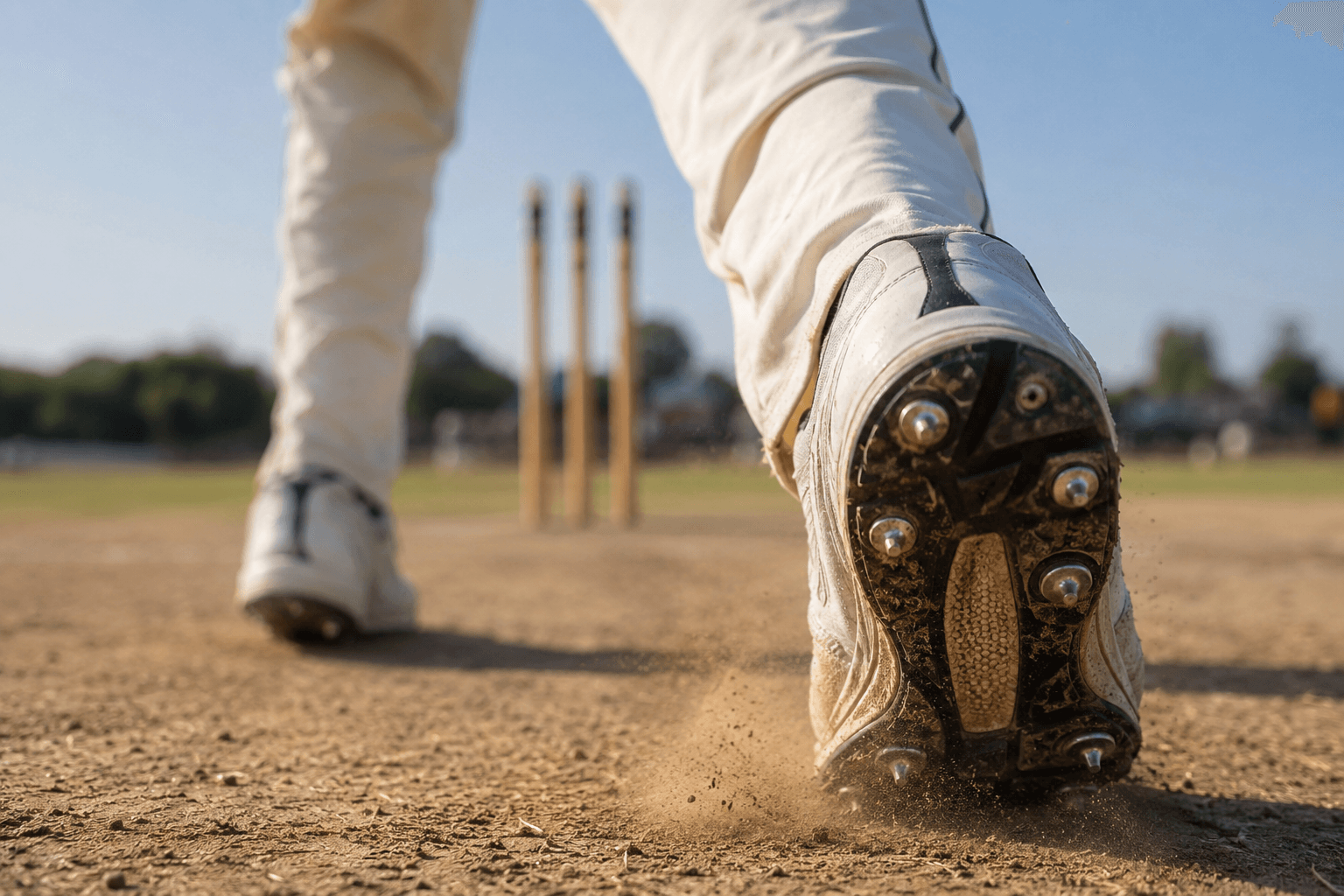
I remember watching the CSK vs LSG match on 10 May 2026 at Chepauk — a breathtaking run chase where Josh Inglis single-handedly tore CSK’s bowling apart with a 33-ball blitz. But what struck me in that game wasn’t Inglis. It was watching Mukesh Choudhary’s delivery stride — the way his front foot planted, the micro-slip before release, the drag across dry Chepauk clay. He was working hard. But the ground was working against him. A fast bowler’s shoe is the first point of contact between their body and the pitch, and yet most Indian players — even decent club cricketers — are bowling in the wrong pair.
If you want to bowl fast, stay injury-free, and actually get something out of your run-up, you need to understand the best cricket shoes for fast bowlers in India — not just which brand looks cool, but what technology, spike configuration, and ankle support your body actually demands. And that’s exactly what this article breaks down. If you’re also looking to level up your overall game, don’t miss The Ultimate Guide to Fast Bowling in Cricket (Beginner to Pro)— it covers everything from run-up mechanics to yorker execution in one place.
Why This Topic Matters in Modern Cricket
Fast bowling in the T20 and IPL era is more physically demanding than it’s ever been. Pace bowlers are expected to hit 140 kmph in the powerplay, bowl back-of-a-length thunderbolts in the middle overs, and then return to nail yorkers in the death — often with only two or three overs of rest in between.
This isn’t Test cricket where a Bumrah or Shami could manage his workload across five days. In IPL 2026, bowlers like Mohammed Shami (LSG) are playing back-to-back matches every three to four days. The stress on a fast bowler’s knees, ankles, and toe joints is immense, and it compounds every time they run in on hard Indian surfaces — from the concrete-hard red soil of Chepauk to the naturally abrasive surface at Ekana, Lucknow.
The wrong shoe doesn’t just slow a bowler down. It quietly destroys them. Stress fractures, shin splints, plantar fasciitis, toe bruising from the drag — these aren’t random injuries. They are footwear failures. The best cricket shoes for fast bowlers in India are designed specifically to absorb, distribute, and redirect those impact forces. The difference between a ₹800 rubber-soled gym shoe and a proper spike shoe built for pace bowling is, quite literally, the difference between a long career and an early exit.
If you want to know more about other reasons keeping way fast bowlers from consistent performance, check out our article Why Most Bowlers Never Master the Yorker in T20s — And What Cricket Analytics Reveals About Fixing It.
Core Analysis: What Makes a Shoe Right for Fast Bowling
1. Spike Configuration — The Foundation of Grip and Control
Not all spikes are the same, and this is where most casual cricketers make their first mistake. Fast bowlers need full-spike configurations — metal or hard rubber spikes placed under the heel AND forefoot — because the delivery stride involves a heel-plant followed by explosive toe push-off. Half-spike or rubber-stud shoes, which are fine for batters and all-rounders, simply don’t offer enough friction for a 20+ metre run-up.
The key brands to know here are:

https://amzn.to/4tXGhSN
https://amzn.to/3PlF3lY
- Adidas Adipower Vector Mid: The professional standard for pace bowlers globally. Metal spikes, excellent heel-to-toe transition, and a reinforced toe cap that handles the drag without breaking down. It’s the gold standard in international cricket — and for good reason.
- Puma 19.1 Cricket Shoes: A strong alternative with EVA midsole cushioning and heel-specific spike placement. Lighter than the Adidas, which suits smaller-framed bowlers who don’t want extra weight at the end of a 10-over spell.
- SG Savage Spike: The best cricket shoe for fast bowlers in India at the club and school level. It’s widely available, affordable, and the spike configuration actually does what it promises on Indian pitches. For anyone not yet at the professional level, the SG Savage is the honest answer.
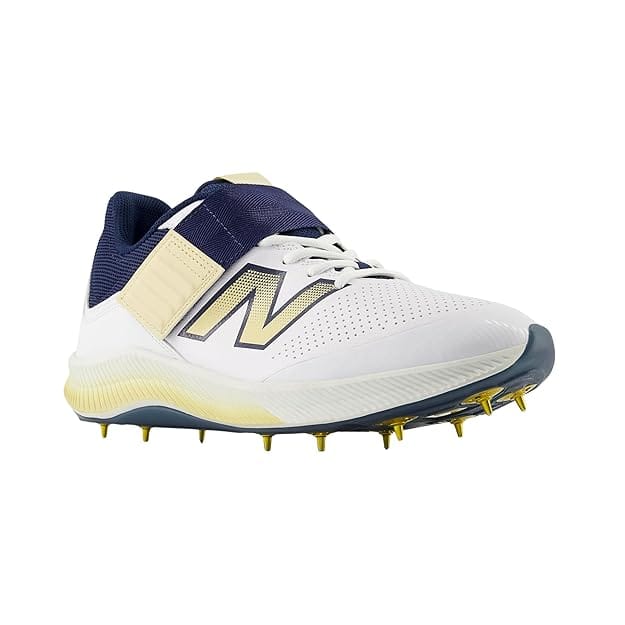
- New Balance CK4040: A brilliant option for fast-bowling all-rounders. The Fresh Foam midsole delivers premium cushioning that helps with both the bowling crease and running between wickets.
📌 External Reference: For spike technology comparisons, Cricket Store Online’s 2025 Guide (https://cricketstoreonline.com/collections/cricket-shoes) breaks down brand-specific stud geometry clearly.
2. Ankle Support — The One Feature Indian Bowlers Underestimate
Here’s something I’ve noticed watching domestic cricket circuits across India: medium-pace bowlers almost universally wear low-top shoes. It’s lighter, it’s cheaper, and nobody tells them otherwise. But your ankle is taking a serious beating every single time your front foot lands during a delivery — especially on the hard, unforgiving surfaces in Indian grounds during April and May.
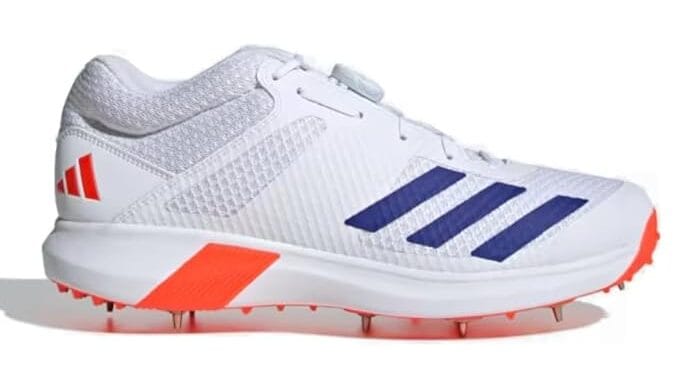
Mid-top or high-top bowling shoes exist for a reason. The Adidas Adipower Vector Mid, for instance, wraps the ankle with structured support that prevents the lateral rolling that causes sprains and long-term joint damage. If you bowl more than 15 overs per week — in nets, in matches, combined — you should seriously consider a mid-top shoe. The weight penalty is minimal. The protection is substantial.
For club-level Indian bowlers, the New Balance CK4040 offers a dual-purpose design with ankle stability that works for both bowling and batting. It’s the practical choice for someone who can only afford one pair of quality cricket shoes.
3. Toe Protection — The Feature Nobody Reads About Until It’s Too Late
Every serious fast bowler drags their front foot through the crease during delivery. Watch any slow-motion clip of a fast bowler — the toe scrapes across the pitch surface, absorbing friction with every ball. Over a 4-over spell in a match, that’s 24 deliveries of toe-drag on hard ground. Over a net session? Multiply that significantly.
Budget shoes fail here first. The toe area deteriorates within a season, the upper splits, and suddenly your toes have zero protection during the most mechanically stressful moment of the bowling action. Reinforced toe caps — found on the Adidas Vector series, the Puma bowling-specific range, and even the mid-range DSC models — are non-negotiable for pace bowlers who bowl regularly.
In the CSK vs LSG match on 10 May 2026, Anshul Kamboj bowled a disciplined spell in difficult conditions — the kind of performance that builds with consistent net work. That consistency is only possible when a bowler’s body isn’t fighting injury between sessions. Proper toe protection is a big part of that equation.
4. Cushioning — Especially for Indian Hard Pitches
Indian pitches, particularly the red-clay tracks in Tamil Nadu, Maharashtra, and UP, are among the hardest bowling surfaces in world cricket. Chepauk in March and April is essentially concrete covered in a thin layer of grass. The shock absorption demand on a fast bowler’s knees and heels is enormous.
This is where midsole technology matters: IGNITE foam (Puma), Adiprene+ (Adidas), and Fresh Foam (New Balance) are all designed to return energy while absorbing impact. What this means practically — your heels hurt less at the end of a spell, your knees recover faster overnight, and you bowl with confidence rather than compensating for foot pain by shortening your run-up.
For Indian conditions specifically, prioritise cushioning just as highly as spike quality. The best cricket shoes for fast bowlers in India balance both — grip for the pitch, cushioning for the body.
5. Price-to-Performance Reality for Indian Markets
Let’s be honest about budget. India’s cricket footwear market has improved significantly, but the gap between premium international brands and local options is still wide.
Here’s a rough practical breakdown:
- ₹1,500–₹3,000: SG Savage, Nivia Eden — functional for school and casual club cricket. Acceptable grip, basic cushioning, limited durability.
- ₹3,500–₹7,000: Puma Evo Range, DSC cricket spikes — solid mid-range. Better cushioning, genuine ankle support, appropriate for serious club cricket.
- ₹8,000–₹15,000: Adidas Adipower Vector series, New Balance CK4040 — professional-grade. Buy once, use for two to three seasons.
The key insight is that a ₹1,500 shoe replaced every season actually costs more than a ₹10,000 shoe replaced every three seasons — and the premium shoe actively reduces injury risk in between.
Tactical/Strategic Breakdown: How Smart Bowlers Use Their Footwear
Bowling Strategy — Shoe Choice by Pitch Type
This is where it gets analytically interesting. The best cricket shoes for fast bowlers in India aren’t the same pair for every surface.
Hard, dry pitches (Chepauk, Ekana in summer): Metal-spike full-spike shoes are essential. The ground is too firm for rubber studs to grip effectively. Mitchell Marsh’s opening partnership with Josh Inglis in the LSG vs CSK chase on 10 May 2026 at Chepauk exposed CSK’s bowlers early — and part of that was the pace at which the outfield moved. Fast bowlers need maximum traction to control their approach on surfaces like this.
Dew-affected evening pitches (most IPL night matches): Dew makes the surface slick by the 15th over. Bowlers with good spike grip maintain their run-up rhythm; those without it shorten their approach instinctively and lose pace. This is an underrated tactical variable in IPL death bowling.
Practice surfaces / nets: For nets, especially artificial turf nets common across Indian academies, rubber-stud or half-spike shoes protect the surface and are usually mandatory. Most bowlers, including IPL academy trainees, use a second pair specifically for net sessions.
Captaincy Decisions — When a Bowler’s Footwear Becomes a Tactical Problem
Here’s something most cricket analysts never discuss: a fast bowler who is struggling with footwear — slipping at the crease, overcompensating in his run-up, bowling through toe pain — becomes a tactical liability. Captains in the IPL increasingly track a bowler’s foot stability at the crease, particularly in the death overs when every no-ball and wide has a run-rate consequence.
Ruturaj Gaikwad noted after the May 10 CSK vs LSG match that they needed their bowlers to “get it right at the crease” in the powerplay — and that’s not just about skill. Footing literally matters. When Anshul Kamboj conceded 63 runs in the LSG vs CSK match on May 15 at Ekana, part of the story was landing under pressure on a pitch that demanded precise footwork. Consistent grip and balance through the delivery stride is the first physical input into accuracy.
The Future Trend: Where Cricket Footwear Is Heading
The next five years in cricket shoe technology will look very different from today, particularly for fast bowlers in India.
1. Customised Spike Configurations: Brands like Adidas already offer interchangeable spike systems. The next step is pitch-condition-specific spike kits — different stud shapes and depths optimised for morning vs. evening conditions, turf hardness levels, and even individual bowler biomechanics. Top IPL franchises are already working with sports science teams on this.
2. Data-Integrated Footwear: Embedded sensor technology in bowling shoes — already in prototype phase across several international cricket boards — will track foot pressure, landing angles, and run-up cadence in real time. Coaches will eventually get live biomechanical feedback during nets.
3. India-Specific Design: SG and MRF, the two dominant domestic brands, are increasingly investing in fast-bowler-specific shoe engineering rather than adapting international designs. Given India’s unique pitch characteristics, ground temperatures, and playing volume, India-specific spike configurations could genuinely outperform global brands for local conditions within the next few years.
4. Injury-Prevention Priority: As BCCI workload management protocols tighten around fast bowlers — driven by the pace-bowling injury crisis that has plagued Indian cricket internationally — footwear will become a formal part of medical staff oversight, not just a kit choice left to individual players.
Wrapping Up: Your Shoes Are Your First Tactical Decision
Fast bowling is a violent, beautiful act of controlled aggression. Every element of your physical setup matters — your run-up, your load phase, your wrist position at release. But all of that starts with what your feet feel when they hit the ground.
The best cricket shoes for fast bowlers in India are not the most expensive pair you can find. They’re the right pair — the one that matches your pitch, your bowling style, your body type, and your career stage. Whether that’s a ₹2,500 SG Savage getting you through your school season or a ₹12,000 Adidas Vector keeping you healthy through an IPL campaign, the investment logic is identical: protect the machine, and the machine performs.
Great bowlers aren’t just born. They’re built — one session, one over, one landing at a time. Make sure your foundation is right.
FAQs
What type of shoes should fast bowlers wear in cricket?
Fast bowlers should wear full-spike cricket shoes with reinforced toe caps, adequate heel cushioning, and ankle support. Mid-top designs are preferable to protect against ankle rolling during the delivery stride.
Are metal spikes better than rubber studs for fast bowlers in India?
Yes, for hard Indian pitches — particularly during the April-May season — metal spikes offer significantly better traction and run-up grip than rubber studs. Rubber studs are more appropriate for artificial surfaces and nets.
What is the best cricket shoe brand for fast bowlers in India?
Adidas (Adipower Vector series) is widely considered the best for professional-level pace bowlers. For Indian club cricketers on a budget, SG Savage offers reliable performance at an accessible price point.
How much should I spend on cricket shoes as a fast bowler?
Serious club cricketers should budget between ₹3,500 and ₹8,000. Professional-grade shoes from Adidas or New Balance range from ₹8,000 to ₹15,000 and typically last two to three seasons.
Should fast bowlers wear high-top or low-top cricket shoes?
Mid-top or high-top cricket shoes are strongly recommended for fast bowlers. They provide ankle support during the high-impact front-foot landing, reducing the risk of sprains and long-term joint damage.
Why do fast bowlers need reinforced toe caps in their cricket shoes?
Fast bowlers drag their front foot through the delivery stride on every ball. The toe area absorbs significant friction across a spell. Without a reinforced toe cap, the shoe deteriorates rapidly and exposes the foot to injury.
Can I use regular running shoes for fast bowling?
No. Running shoes lack the spike configuration, lateral stability, and toe reinforcement required for bowling. Using running shoes for regular fast bowling significantly increases injury risk.
Does shoe cushioning matter for fast bowlers on Indian pitches?
Yes, especially during the summer season when Indian pitches are at their hardest. Premium midsole technologies like Adidas Adiprene+, Puma IGNITE foam, and New Balance Fresh Foam reduce impact stress on knees and heels significantly.
How often should fast bowlers replace their cricket shoes?
Mid-range shoes typically last one to two seasons under regular use. Premium shoes from Adidas or New Balance can last two to three seasons. The toe cap area is usually the first to show wear — inspect it regularly.
Is it worth buying separate shoes for nets and matches?
Ideally, yes. Most artificial turf practice nets in India require rubber-soled shoes. Bowling in metal spikes on artificial surfaces damages both the surface and the shoe. A separate pair of rubber-stud shoes for nets extends the life of your match spikes considerably.



Pingback: Home Cricket Training setup Guide: Perfect for Any Budget